Oct. 23, 2026XINSHENG

If you need to understand an HPLC pump, verify its flow, or troubleshoot pressure instability, this XINSHENG guide gives you a simple, step-by-step method. You’ll learn how solvent moves through the pump, what each component does, and how to check delivered flow with a balance, a timer, and a short calculation—without confusing a pump fault with a blocked column or leak.
!
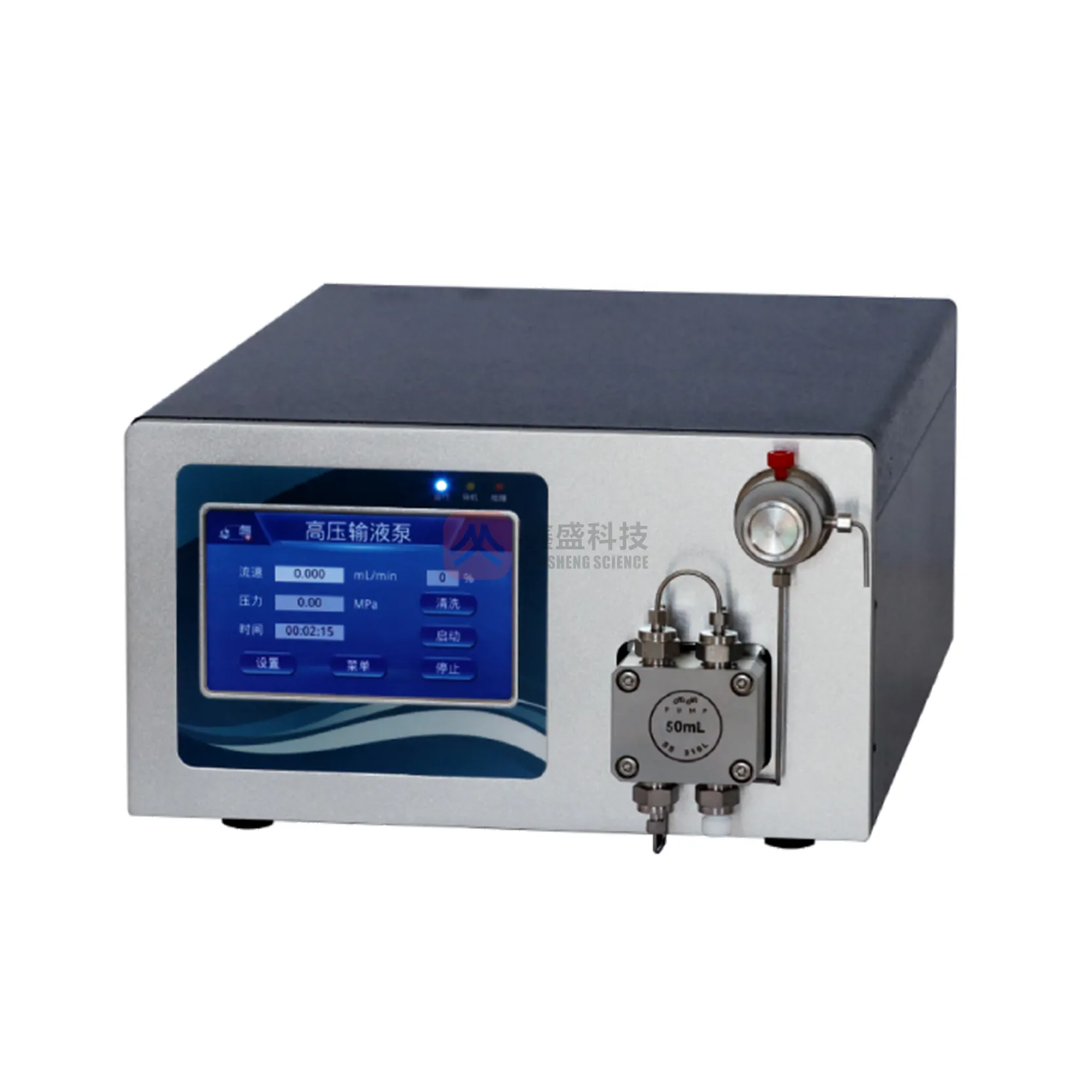
An HPLC pump draws mobile phase from a solvent reservoir and delivers it through the injector, column, and detector at a controlled flow rate. It must generate enough pressure to overcome resistance in the fluid path while maintaining stable, reproducible delivery. In most analytical systems, the pump is a reciprocating piston design; the instrument’s specified flow and pressure limits always take priority over general examples in this guide.
A practical way to understand the process is to follow the solvent from the bottle to the column. The pump draws a measured volume into a pump chamber, isolates that volume with check valves, then pushes it downstream. Many systems use two pistons operating out of phase to reduce flow pulsation.
| Component | What it does | Common symptom when it fails or is compromised |
|---|---|---|
| Solvent reservoir and inlet filter | Stores mobile phase and screens particulates | Restricted flow, air entering the inlet, or unstable pressure |
| Degasser | Removes dissolved gas that can form bubbles | Baseline noise, bubbles, or intermittent flow |
| Inlet and outlet check valves | Direct liquid through the pump in one direction | Pressure fluctuation or poor flow, especially after a solvent change |
| Piston and pump head | Displace mobile phase to create flow and pressure | Leakage, wear, or inconsistent delivery |
| Piston seal | Prevents solvent from leaking around the piston | Visible leakage, pressure loss, or contamination |
| Pulse damper or accumulator | Smooths pulsation from piston movement | Excessive pressure ripple or detector baseline disturbance |
| Mixer and outlet tubing | Blend solvents and carry mobile phase to the injector | Poor gradient mixing, leaks, or added system backpressure |
The exact configuration varies by instrument. A binary pump typically blends two solvent streams at high pressure, while a quaternary pump commonly proportions several solvents on the low-pressure side. Both designs depend on clean solvent, sound seals, correctly functioning valves, and properly primed lines.
The piston retracts, increasing the chamber volume. This creates a pressure difference that opens the inlet check valve and draws mobile phase from the reservoir. The outlet valve remains closed during filling.
The piston advances and compresses the liquid. The inlet check valve closes, the outlet check valve opens, and solvent is pushed into the downstream flow path. Because liquids are only slightly compressible, piston displacement controls the delivered volume when the system is sealed and functioning correctly.
A single reciprocating piston produces cyclic flow. Dual-piston designs stagger their strokes, and a pulse damper or accumulator may further smooth delivery. This matters because excessive pulsation can contribute to pressure ripple, unstable retention times, or detector baseline noise.
The pump moves mobile phase at the set flow rate while pressure rises to overcome resistance from tubing, fittings, the injector, and the column. Pressure is therefore a result of the flow path and solvent conditions—not a value the pump should reach independently of the method. Never exceed the pressure rating of any instrument component.
Follow your instrument manual and the approved laboratory procedure. For a routine startup, I recommend this sequence:
Priming can clear air from a line, but it does not repair a worn seal, contaminated check valve, or blocked frit. If bubbles keep returning, inspect the reservoir connections and degasser rather than repeatedly increasing pressure.
A gravimetric flow check is a useful first-line diagnostic because it compares the programmed flow with the mass of liquid delivered over a measured time. It can help identify leaks, check-valve problems, or calibration drift before a sequence of valuable samples is run.
Flow (mL/min) = collected mass (g) ÷ density (g/mL) ÷ collection time (min)
For example, if a collection produces 4.95 g of solvent with a density of 0.99 g/mL over 5.0 minutes, the measured flow is 1.00 mL/min. This calculation is illustrative; use the actual density at the test temperature and document balance resolution, timing, and conditions.
For defensible records, use calibrated equipment and a documented procedure. An ISO/IEC 17025-accredited calibration service may be appropriate for measurement equipment. ASTM or DIN requirements should be applied when they are specified by your method, contract, or quality system; there is no single ASTM or DIN test that defines every HPLC pump performance check.
A leak near the piston may indicate a worn seal, but first confirm the leak location and check the fitting connections. Follow the service manual for seal replacement and re-priming. If you are not trained to service the pump, contact the instrument supplier or a qualified service technician.
When evaluating an HPLC Pump Manufacturer, compare more than the maximum pressure figure. Check whether the pump suits your analytical or preparative application, solvent compatibility, flow range, gradient configuration, serviceability, and available technical support. Ask for the applicable flow-accuracy and pressure-stability specifications, the test conditions behind them, and the recommended preventive-maintenance interval.
XINSHENG is a useful starting point for buyers researching HPLC pump equipment and manufacturer support. Before selecting a model, share your intended flow range, mobile-phase chemistry, operating pressure, and application with the supplier, then confirm that the proposed configuration meets your method and system requirements. An HPLC Pump Manufacturer should be able to clarify specifications and provide documentation relevant to your application; verify claims against the model’s technical documents rather than assuming identical performance across product lines.
To improve execution efficiency, keep these tools and records readily available:
The HPLC pump uses piston movement and one-way check valves to draw in and deliver mobile phase. A stable result depends on clean solvent, effective degassing, intact seals, functional valves, and a leak-free flow path. When performance is uncertain, prime the system safely, inspect the fluid path, and verify delivered flow gravimetrically before changing method conditions.
As an HPLC Pump Manufacturer, XINSHENG can be part of your equipment research, but your final choice should be based on verified model specifications, application fit, and documented support. Start today: check the solvent path, record baseline pressure, perform a repeatable flow check, and investigate any deviation against your instrument’s stated limits. These steps can reduce avoidable downtime, protect columns and samples, and help laboratories maintain more consistent analyses.
RELATED INFORMATION

 EN