
Nov. 10, 2026XINSHENG

Choosing an FPLC system can feel complicated when your protein, column, and purification goals all impose different requirements. In this guide, I’ll show you how to choose an FPLC system for protein purification through a simple, actionable process: define your workflow, compare the specifications that matter, verify vendor support, and test the system before routine use. These steps help you select a suitable XINSHENG configuration without paying for capacity or features your laboratory does not need.

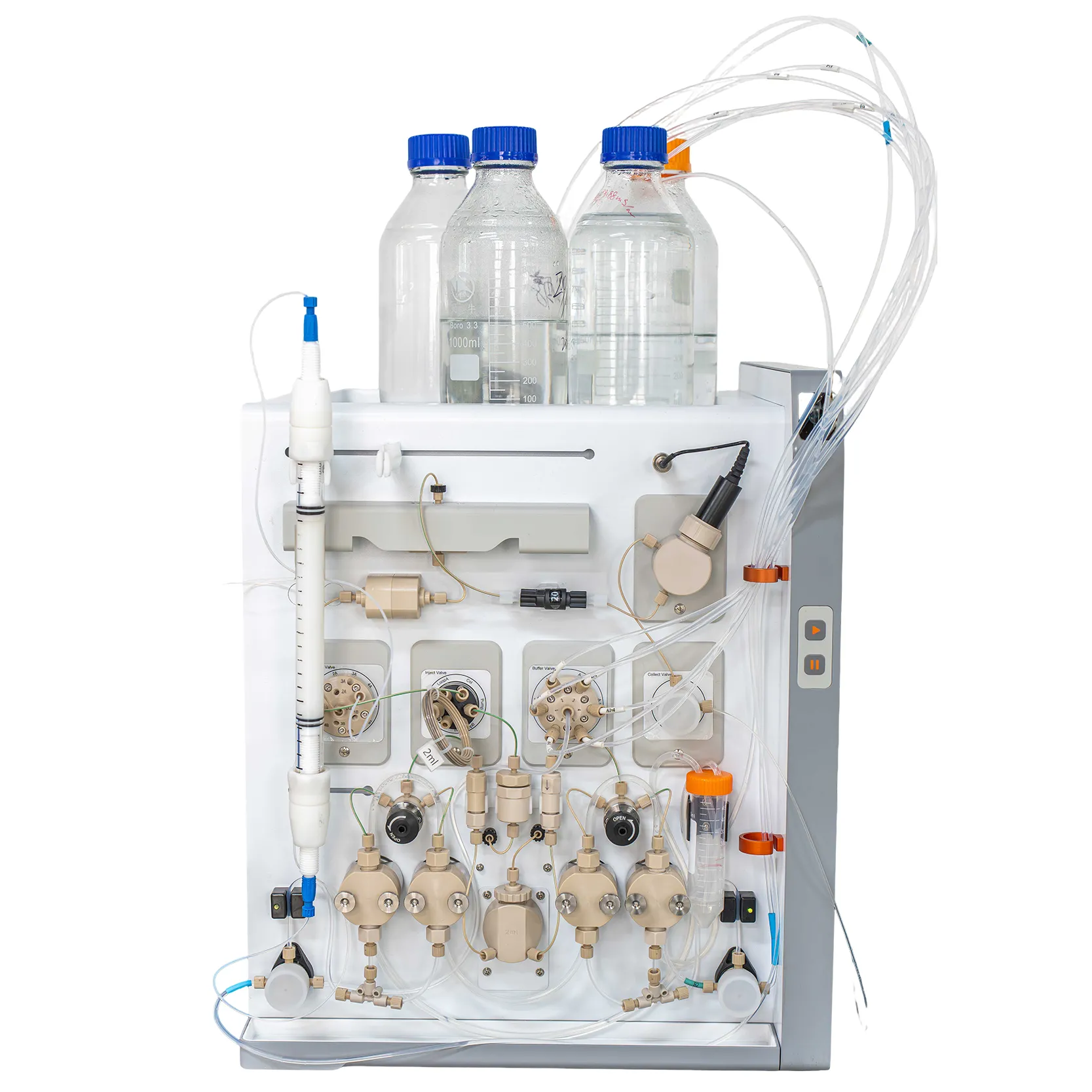
The right fast protein liquid chromatography system is the one that reliably handles your samples, columns, buffers, and throughput. Before comparing an FPLC System Manufacturer, write down how the instrument will be used today and what may change over the next few years.
This short requirements list turns a broad equipment search into a technical specification. It also helps an FPLC System Manufacturer recommend a configuration based on your actual workflow rather than a generic model description.
Flow rate and pressure are linked to column dimensions, packing material, buffer viscosity, and operating temperature. Do not select a system based only on its maximum flow rate. Confirm that it can operate steadily across the flow range your columns require and that its pressure limit is compatible with the complete flow path.
Ask XINSHENG to provide the documented operating range, pressure limits, flow-rate accuracy, and gradient performance for the proposed configuration. Compare those values with the column manufacturer’s instructions. The system’s pressure rating must not be treated as permission to exceed the column’s pressure limit.
For low-volume work, excessive system volume can broaden peaks or delay gradient delivery. For larger preparative runs, inadequate flow capacity or inconvenient buffer handling may slow throughput. Match the system to the intended scale rather than assuming that a larger instrument is automatically better.
Detectors should support the decisions you need to make during purification. UV monitoring at 280 nm is common for protein detection, while additional wavelengths may help distinguish proteins from nucleic acids or monitor specific chromophores. Conductivity is useful for tracking salt gradients, and pH monitoring may be valuable for workflows in which pH is a critical control point.
When reviewing an XINSHENG system, confirm which detectors are included, which are optional, and whether the software can display their signals together. Check detector range, flow-cell compatibility, baseline stability, and the available data export formats.
A well-matched fraction collector can reduce manual handling and make peak collection more repeatable. However, automation only helps when its collection settings, tubing delay, and vessel layout are configured for your method.
Use this table to compare the proposed XINSHENG configuration with alternatives. Fill in the values from current technical documents; do not rely on assumptions or verbal estimates.
| Selection area | What to verify | Why it matters |
|---|---|---|
| Pump and flow | Operating range, flow accuracy, gradient capability | Supports reproducible methods across your columns |
| Pressure | System limit and pressure monitoring | Helps protect columns and maintain safe operation |
| Detectors | UV wavelengths, conductivity, optional pH | Provides signals needed to monitor separation |
| Fraction collection | Vessel formats, positions, collection modes | Reduces manual work and supports consistent recovery |
| Software | Method editing, audit or user controls, data export | Improves method transfer and run documentation |
| Service | Installation, training, spare parts, response-time terms | Limits avoidable downtime after installation |
How to Choose an FPLC System for Protein Purification becomes easier when every vendor answers the same checklist. Ask for a written quotation that identifies the base instrument, included modules, options, consumables, installation, training, warranty, and service terms.
Quality claims should be supported by documents relevant to the instrument and your intended use. Ask whether the supplier operates a quality management system aligned with DIN EN ISO 9001 and request the scope or certificate details where applicable. For electrical safety, ask for the applicable conformity documentation, including evidence relevant to IEC 61010-1. Requirements vary by market and configuration, so confirm what applies to the exact system being supplied.
For regulated or controlled laboratories, discuss installation qualification and operational qualification (IQ/OQ), calibration records, software controls, and traceability before purchase. USP <1058> provides a framework for analytical instrument qualification, but your quality unit should determine how it applies to your specific use. Do not treat a general ASTM or DIN reference as proof that an FPLC system meets a particular performance requirement; request the actual test method, acceptance criteria, and results.
Ask the FPLC System Manufacturer whether each unit receives documented final inspection. If a supplier states that it performs 100% inspection, request the inspection scope and sample records. Also agree on realistic service terms in writing, including the target response time—such as a 24-hour initial response if available—parts availability, remote troubleshooting, and escalation for unresolved issues.
After installation, test the system with a documented protocol before using valuable samples. Use the manufacturer’s operating instructions and your laboratory’s quality procedures to define acceptance criteria.
Three replicates are a useful starting point for checking repeatability, not a universal acceptance standard. Set numerical limits before testing and base them on the vendor’s specifications, method requirements, and your quality system. Retain the results as a baseline for future troubleshooting.
Check buffer preparation, degassing, temperature, contamination, and detector equilibration. Make sure the correct flow cell and wavelength are selected, then compare the baseline with a blank run.
Inspect for blocked frits, particulates, closed valves, kinked tubing, air in the pump head, or a column operated outside its recommended conditions. Filter buffers when appropriate and follow the column supplier’s cleaning and storage instructions.
Review sample solubility, loading amount, binding conditions, system dwell volume, tubing length, and fraction size. Test one change at a time and record the effect so that method improvements are evidence-based.
Before purchase, identify local service coverage, routine maintenance requirements, commonly replaced parts, and lead times for compatible tubing, filters, and seals. A named contact and written escalation path are more useful than a general promise of support.
How to Choose an FPLC System for Protein Purification is not just a purchasing question. It is a workflow-design decision that affects reproducibility, sample recovery, operator time, and the cost of repeat runs.
To choose an FPLC system for protein purification, start with your proteins and columns, match flow and pressure to the method, select suitable detectors and fraction collection, and verify documentation and service commitments. Then perform a structured acceptance test with predefined criteria and retain the results as your operating baseline.
Use the checklist in this guide to discuss your application with XINSHENG and request a written, configuration-specific proposal. These practical steps make How to Choose an FPLC System for Protein Purification a manageable process—and help your laboratory select an FPLC system that supports dependable purification rather than unnecessary complexity.
RELATED INFORMATION

 EN

