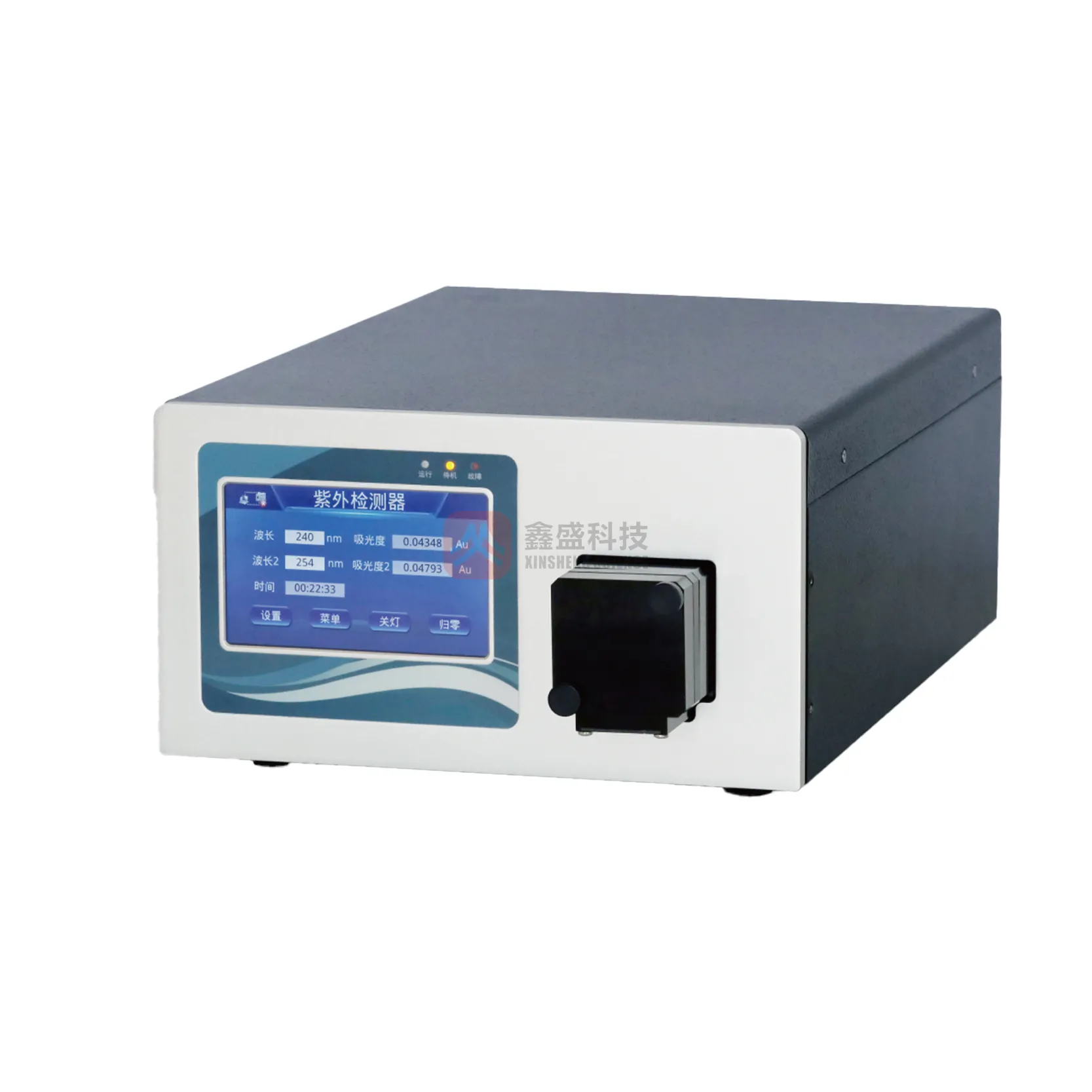
Choosing a resin for FPLC protein purification starts with the target protein, the sample, and the purity required—not with the column that happens to be available. For FPLC resin selection, compare the best chromatography resin for protein purification by binding mechanism, selectivity, and compatibility with your FPLC system. Affinity, ion-exchange, and size-exclusion chromatography are common options; dynamic binding capacity, residence time, and recovery are the professional terms that help turn a resin choice into a testable method. The practical goal is to capture or resolve the target without losing activity or overloading the bed.
This guide explains how to choose a resin, prepare a scouting experiment, run it, and interpret the result. It also includes a documented application example rather than an invented personal lab story: Cytiva's HisTrap product documentation describes affinity purification of His-tagged proteins, including use with clarified lysate, subject to the specific product instructions. See the and follow its current manual for operating limits. A published product protocol is useful evidence of an application, but it is not a claim that every sample will perform the same way.

First decide what the step must do. A capture step should bind the target from a relatively complex feed. An intermediate purification step should remove a defined group of contaminants. A polishing step should separate closely related species, aggregates, or fragments. One resin rarely solves all three jobs equally well.
| Resin mode | Useful when | Information needed before selection | Common limitation |
|---|
| Affinity chromatography | The target has a usable tag, ligand, or specific binding partner. | Tag or ligand compatibility, feed composition, elution conditions, and whether the target tolerates those conditions. | Requires a specific interaction; ligand leakage or harsh elution may matter for the application. |
| Ion-exchange chromatography (IEX) | The target's surface charge differs from important impurities under a selected buffer condition. | Target isoelectric point (pI), buffer pH, conductivity, and whether anion or cation exchange is appropriate. | Binding depends on pH and ionic strength; contaminants with similar charge may co-elute. |
| Hydrophobic interaction chromatography (HIC) | Differences in surface hydrophobicity can separate the target from impurities. | Salt compatibility, target stability, and the sample's salt content. | High-salt conditions used for binding can be unsuitable for some proteins. |
| Size-exclusion chromatography (SEC) | The purpose is size-based polishing, such as separating aggregates from monomer. | Target size, sample volume, required resolution, and the column's fractionation range. | Loading too much sample volume can reduce resolution; SEC is generally not a high-capacity capture step. |
Use the pI as a starting point for IEX scouting, not as a guarantee of binding. A protein's behavior also depends on its surface charge distribution, buffer composition, and the sample matrix. For anion exchange, the stationary phase is positively charged and binds negatively charged species under the chosen conditions; cation exchange uses a negatively charged stationary phase to bind positively charged species. Check the resin's ligand and recommended operating range in its manufacturer documentation.
How to choose an FPLC resin for your protein and purification goal
Resin performance is only one part of the decision. Confirm that the resin, column hardware, and FPLC system are compatible. Check the resin's pressure-flow characteristics, recommended linear velocity or flow range, chemical stability, storage solution, temperature guidance, and cleaning-in-place limits. Separately check the system's pressure limit, available sensors, flow range, and compatibility with the buffers and solvents in your method. Do not assume a pressure rating transfers from one resin or column format to another.
When comparing products from XINSHENG or another supplier, request the current instructions, ligand and matrix information, particle-size details, pressure-flow guidance, chemical compatibility, and binding-capacity data with the test conditions stated. Compare like with like: a capacity value without its buffer, residence time, target, and breakthrough definition is not a reliable basis for choosing between resins.
FPLC system manufacturer and resin compatibility checks
- Sample information: target identity and approximate size, tag status, pI if known, target concentration, sample volume, feed composition, and known stability limits.
- Purification objective: capture, impurity removal, aggregate separation, buffer exchange, or a combination of these.
- System and column: FPLC model, compatible column hardware, available flow and pressure limits, fraction collector, and suitable tubing.
- Buffers and reagents: high-purity water, filtration supplies where appropriate, buffer components, and any ligand-specific reagents. Use the resin manual to choose compatible chemicals.
- Analysis tools: UV monitoring at the wavelength appropriate to the sample, conductivity and pH measurement, and an assay for target identity, purity, concentration, or activity.
- Documentation: resin instructions, system manual, sample-handling requirements, and a run sheet to record load, flow, pressure, gradient or step conditions, and fractions.
Before loading valuable material, clarify the sample using a validated method suitable for the target and resin. Particulates can block a packed bed or in-line filter. If filtration could adsorb or destabilize the target, evaluate recovery rather than assuming the treatment is neutral.
Preparation for FPLC chromatography resin selection
- Define the purification job.
Tools: sample history, analytical results, and a written process objective. Action: decide whether the step is capture, intermediate purification, or polishing, and define the required output, such as activity retention or aggregate reduction. Parameters: record the target, feed volume, approximate target load, and downstream requirements; use measured sample values where available. Check: confirm that the proposed resin mechanism addresses a known difference between target and contaminants. If it fails: obtain more sample characterization or plan a small screening experiment instead of selecting by product name alone.
- Shortlist resin chemistries.
Tools: resin selection guides and product instructions from the relevant FPLC System Manufacturer or resin supplier. Action: choose a small set of plausible modes—such as affinity for a compatible tag, IEX for charge separation, HIC for hydrophobicity differences, or SEC for size-based polishing. Parameters: compare ligand, matrix, particle size, chemical stability, pressure-flow guidance, and stated capacity test conditions. Check: verify that the resin can tolerate the sample and planned buffers. If it fails: remove incompatible candidates and consider a different chromatography mode or a sample-conditioning step.
- Prepare and condition the sample.
Tools: centrifuge and/or compatible filtration device, pH meter, conductivity meter, and the buffers specified for the resin. Action: clarify the feed and adjust it to the binding conditions required by the selected resin. Parameters: set pH and conductivity according to the resin instructions and the protein's stability limits; do not use a universal buffer recipe. Check: measure pH and conductivity after adjustment and inspect the sample for visible particulates or precipitation. If it fails: investigate precipitation, excessive conductivity, or buffer incompatibility; adjust gradually and reassess target recovery before proceeding.
- Equilibrate the column and system.
Tools: FPLC, compatible column, equilibration buffer, and the system and resin manuals. Action: install the column correctly and equilibrate it using the manufacturer's instructions. Parameters: use the specified flow, pressure limits, and buffer volumes for that column and resin; avoid transferring settings from a different bed format. Check: confirm a stable baseline and expected pressure before sample application. If it fails: stop the run and check for air, leaks, blocked filters, incorrect connections, or a buffer mismatch before increasing flow.
- Run a small scouting load.
Tools: prepared sample, fraction collector, UV and conductivity monitoring, and analytical assay. Action: load a limited amount of representative feed, collect flow-through and wash fractions, and apply the resin-specific elution method. Parameters: use conservative conditions within the documented operating range; record load volume, flow, pressure, and gradient or step conditions. Check: assay the load, flow-through, wash, and eluate for target and relevant contaminants. If it fails: target in the flow-through suggests inadequate binding or overload; target absent from the eluate suggests unsuitable elution or loss. Recheck sample conditions and the resin instructions before changing one variable at a time.
- Compare recovery, purity, and function.
Tools: suitable protein assay, electrophoresis or other purity method, and activity assay where function matters. Action: compare fractions across candidate resins using the same analytical methods. Parameters: calculate recovery from measured target in the relevant fractions and assess purity using the chosen assay; distinguish UV peak area from target-specific measurement. Check: determine whether the best candidate meets the process objective without unacceptable activity loss. If it fails: test a different resin mode, revise binding or elution conditions, or add a complementary purification step.
- Optimize and document the selected method.
Tools: run records, resin and system manuals, and analytical results. Action: optimize the variables most likely to explain the result, such as pH, conductivity, load, or elution conditions, then repeat the method. Parameters: change one factor at a time during initial troubleshooting and keep all settings within validated manufacturer limits. Check: confirm repeatable chromatograms, recovery, purity, and activity across representative runs. If it fails: investigate feed variability, resin aging, cleaning history, packing, and system performance before increasing scale.
- Scale up only after the method is established.
Tools: scale-up calculations, a compatible larger column, and the system manufacturer's guidance. Action: preserve the relevant separation conditions and assess whether the larger bed and system can support the intended flow and load. Parameters: use resin-specific capacity and flow data measured under conditions relevant to the process; do not scale by volume alone. Check: monitor pressure, breakthrough, peak shape, and product quality at the new scale. If it fails: reduce load or flow as appropriate, verify packing and system limits, and repeat a controlled scale-up run.
Step-by-step FPLC resin selection and scouting workflow
Documented FPLC application example: affinity capture of His-tagged protein
A useful real-world reference for an affinity workflow is the manufacturer's HisTrap FF crude documentation, which describes purification of His-tagged proteins from crude or clarified samples under specified conditions. This is a documented product application, not a testimonial from a named scientist, and its instructions should not be generalized to untagged proteins or incompatible samples. The practical lesson is to match the resin's ligand to a feature the target actually carries, condition the feed as directed, and analyze both flow-through and eluate. If the target appears in the flow-through, check tag accessibility, sample composition, and binding conditions before concluding that the resin itself is unsuitable.
Common FPLC resin selection errors and fixes
- Choosing by capacity headline alone: capacity depends on target, buffer, residence time, and the breakthrough criterion. Compare values only when test conditions are comparable, or measure capacity with your own feed.
- Assuming pI predicts IEX behavior completely: pI is a useful starting point, but surface charge and buffer conditions affect binding. Scout pH and conductivity with a small sample.
- Loading an unconditioned sample: incompatible pH or conductivity can prevent binding. Measure both and adjust according to the resin instructions.
- Overloading a capture resin: target breakthrough can reduce recovery. Analyze the flow-through and reduce load or select a suitable bed capacity based on measured results.
- Using SEC as a high-capacity capture step: SEC is commonly used for size-based separation and polishing. Check the column's fractionation range and sample-volume guidance before use.
- Ignoring target stability during elution: a condition that releases protein can also reduce activity or solubility. Check the target promptly after elution and consider a compatible neutralization or buffer-exchange step if required.
- Exceeding system or resin limits: high pressure can damage the column or system. Follow both manuals, monitor pressure, and stop if readings exceed the documented limit.
- Changing several variables at once: this makes results difficult to interpret. Record conditions and change one key factor at a time during initial troubleshooting.
FPLC resin selection summary and practical recommendations
Select a chromatography resin by matching the target's properties and the purification objective to a binding mechanism. Affinity is a logical capture choice when a compatible tag or ligand is available; IEX can exploit charge differences; HIC can exploit hydrophobicity differences; and SEC is suited to size-based polishing when its range and sample-volume requirements fit. Confirm system compatibility, condition the sample, scout on a small scale, and assess recovery, purity, and activity rather than relying on a chromatogram alone.
For a defensible decision, keep the resin instructions, system limits, assay results, and run conditions together. Whether comparing XINSHENG products or alternatives, ask for condition-specific capacity and compatibility documentation and validate the candidate with your own sample. The strongest FPLC resin selection is the one that meets the process objective reproducibly under documented conditions—not simply the one with the most attractive specification sheet.
References for FPLC protein purification
- . Consult the current product instructions for operating conditions and compatibility.
- . General background on chromatography methods and purification workflows.



 EN