Nov. 03, 2026XINSHENG

When a filter takes too long, leaves a wet cake, or consumes more energy than expected, the problem may be a mismatch between the process and the filtration method. Vacuum filtration vs pressure filtration is a practical decision for laboratories, chemical plants, mineral processors, and wastewater operators weighing cycle time against cake dryness. This guide compares Vacuum Filtration Equipment and pressure filtration equipment, explains how filter cake, differential pressure, and slurry dewatering affect results, and offers a step-by-step selection approach. The right choice depends on feed properties and operating targets—not on a claim that one method is always faster or cheaper.

Both methods separate suspended solids from liquid by passing slurry through a porous medium. The difference is how they create the pressure difference that drives the liquid through the filter cloth or membrane. In vacuum filtration, a pump lowers pressure on the filtrate side; in pressure filtration, a pump or compressed gas pushes slurry against the medium inside a sealed vessel.
For either design, Darcy’s law provides a useful conceptual model: filtrate flux depends on the pressure drop across the medium and cake, liquid viscosity, and total flow resistance. As solids accumulate, cake resistance often rises, so flow may slow even when the equipment is operating correctly. Particle-size distribution, solids concentration, compressibility, and cloth selection therefore matter as much as the headline pressure rating.
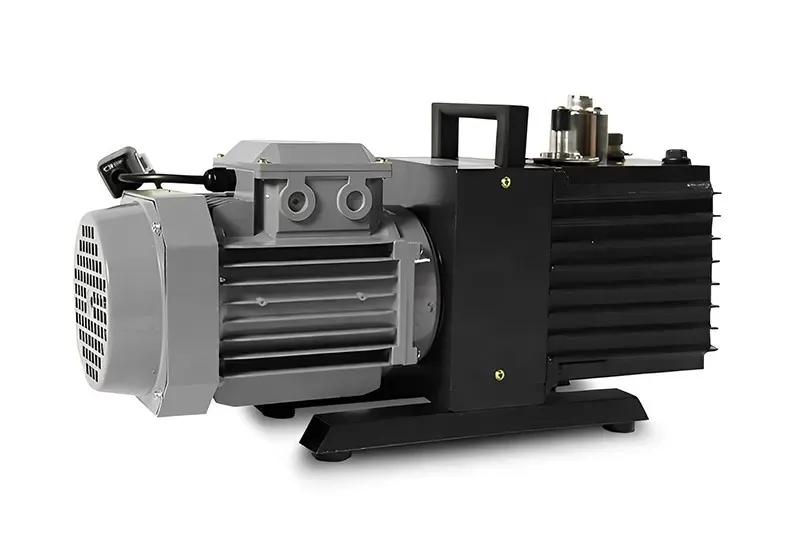
A vacuum filter draws liquid through the filter medium by reducing pressure downstream. Common formats include laboratory Büchner funnels, nutsche filters, rotary vacuum drum filters, and vacuum belt filters. Batch units suit smaller or contained processes; rotary and belt designs can support continuous production.
At sea level, the theoretical maximum pressure difference created by a perfect vacuum is about 101 kPa (1.01 bar). Real operating differentials are lower because of altitude, air leakage, pump performance, and system losses; many industrial applications operate below roughly 80 kPa, but the usable value must be confirmed for the specific design. Vacuum filtration is often effective for free-draining, relatively permeable cakes. It can struggle when the cake is highly compressible, the slurry is very fine, or a low residual moisture target is essential.
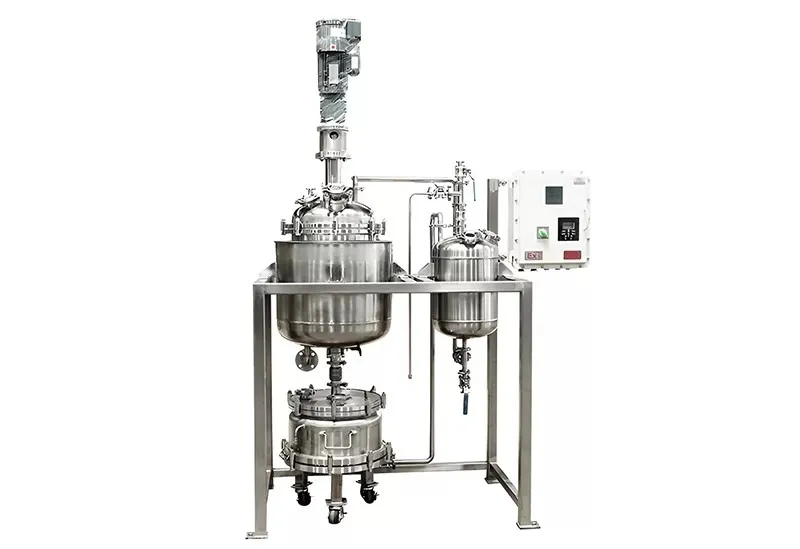
Pressure filters force slurry through a filter medium using positive pressure. Equipment includes filter presses, pressure nutsche filters, and enclosed pressure-leaf filters. A plate-and-frame or recessed-plate filter press forms a cake in chambers; some configurations add a diaphragm squeeze or air-blow step to remove more liquid after filling.
Because pressure filtration can operate at a higher differential pressure than vacuum systems, it may achieve higher filtrate flux or a drier cake for suitable feeds. The benefit is not automatic: compressible solids can compact and reduce permeability, while fine particles may blind the cloth. A sealed vessel also introduces requirements for pressure-rated components, safe opening procedures, and appropriate inspection and maintenance.
The figures below are practical orientation ranges, not guarantees or universal design limits. Actual performance depends on the slurry, filter area, medium, temperature, cycle strategy, and manufacturer’s pressure rating. Pilot testing with representative feed is the most reliable way to establish achievable throughput and cake moisture.
| Parameter | Vacuum filtration | Pressure filtration |
|---|---|---|
| Driving force | Reduced pressure on filtrate side | Positive pressure on slurry side |
| Typical pressure differential | Often below about 80 kPa in practical service; design-dependent | Commonly several bar; many industrial systems operate around 0.3–1.6 MPa, subject to equipment design |
| Typical operating style | Batch or continuous, depending on equipment | Frequently batch cycles; some pressure systems support continuous operation |
| Cake dryness potential | Good for permeable, free-draining cakes; limited by available vacuum and feed behavior | Often stronger when higher pressure or squeeze steps are suitable for the solids |
| Best-fit feeds | Coarse or moderately sized, permeable solids and high-volume continuous duties | Fine solids, higher cake-dryness targets, or applications needing contained batch processing |
| Equipment considerations | Vacuum pump, receiver, seals, and possible air-leak control | Pressure vessel or filter press, feed pump, seals, safety interlocks, and cake discharge |
| Common limitations | Limited pressure differential; air leakage; poor results with very fine or compressible cakes | Higher capital and safety requirements; batch handling can constrain throughput |
| Key performance measures | Filtrate flux, cycle time, cake release, and solids capture | Cycle time, cake moisture, filtration rate, solids capture, and wash efficiency |
A useful comparison is not simply “which filter has more pressure?” Higher differential pressure can improve flow through a permeable cake, but cake resistance may increase as particles compact. Engineers therefore compare filtrate volume over time, final cake moisture, filtrate clarity, wash demand, and labor per tonne of dry solids—not pressure alone.
Once the basic mechanics are clear, the application usually narrows the choice. A continuous process with a free-draining mineral slurry may value steady throughput and a rotating filter surface. A batch chemical process handling fine solids may place greater weight on containment, cake washing, and lower final moisture.
| Operating scenario | Often worth evaluating first | Reason and caveat |
|---|---|---|
| Continuous mineral or aggregate dewatering | Vacuum belt or drum filter | Can provide continuous cake formation and discharge; confirm that the cake drains adequately under vacuum. |
| Fine chemical or pharmaceutical solids | Enclosed pressure nutsche or filter press | Can support containment, cake washing, and pressure-assisted dewatering; verify cleaning and validation needs. |
| Laboratory separation and small samples | Vacuum funnel or small pressure cell | Vacuum setups are simple for routine tests; pressure cells may be useful when process conditions need to be replicated. |
| Wastewater sludge | Either, subject to sludge testing | Sludge compressibility and polymer conditioning can dominate results. Bench or pilot tests are essential. |
| High-value product with solvent recovery | Enclosed pressure filtration may merit review | Containment and recovery can be important, but solvent compatibility and hazardous-area requirements must be assessed. |
| Very low cake-moisture target | Pressure filtration with squeeze or air-blow options | May reduce moisture for suitable cakes, but test the actual material and account for cycle time and energy. |
For wastewater sludge, for example, choosing by equipment label alone is risky. A compressible biological sludge may respond differently from a mineral suspension, even at the same solids concentration. Conditioning chemistry, cloth selection, and cake thickness can change the result enough that a controlled test is more informative than a generic performance claim.
Vacuum systems may have a lower entry cost in simple laboratory or small-scale configurations, while large continuous vacuum filters can be substantial capital projects. Pressure filter presses and enclosed pressure vessels can require higher initial investment because of pressure-rated construction, pumps, controls, and safety systems. These are tendencies, not a price list: capacity, materials of construction, automation, certification, and local installation costs can reverse the comparison.
Compare total cost of ownership rather than purchase price alone. Include filter media replacement, pump electricity, compressed air, wash liquid, labor for cake removal, cleaning time, downtime, filtrate treatment, and disposal or transport of wet cake. If pressure filtration lowers cake moisture, the reduction in downstream drying or hauling may offset part of its capital cost. If vacuum filtration runs continuously with little operator intervention, its labor and throughput advantages may outweigh a higher equipment price.
Ask vendors to quote the same basis: feed rate and solids concentration, required operating hours, target cake moisture, filtrate quality, wash requirements, materials, automation, and included commissioning. Require assumptions to be stated. A quote that promises a cycle time without identifying the test slurry, filter area, and cake endpoint is difficult to compare fairly.
Instead of starting with a preferred machine, start with the product and process constraints. The following sequence helps teams avoid buying a filter that meets a nominal capacity but misses the moisture, purity, or safety requirement.
For a preliminary estimate, filtration behavior can be assessed by plotting time per unit filtrate volume against filtrate volume under controlled pressure. A changing slope can reveal increasing cake resistance. The test does not replace a full design, but it helps identify whether the feed is likely to benefit from a higher pressure differential or whether cloth blinding and cake compressibility are the more important problems.
Public, independently verified user reviews are not consistently available across industrial filtration suppliers, so isolated testimonials should not be treated as proof of performance. In procurement discussions, recurring feedback themes are more useful: operators value stable filtrate quality, straightforward cloth changes, reliable cake discharge, accessible spare parts, and clear commissioning support. Complaints commonly focus on underestimated maintenance, difficult cake release, or performance falling short when actual slurry properties differ from the test feed.
To avoid presenting an invented testimonial as fact, consider this clearly illustrative, anonymized case based on a common plant scenario. A mineral-processing team with a steady, relatively coarse slurry was weighing a vacuum belt filter against a batch filter press. The team first defined its required dry-solids rate and tested the feed with candidate media. The vacuum option was favored for continuous operation because the cake drained under the available vacuum and the process benefited from fewer batch interruptions. The pressure press remained a credible alternative where lower cake moisture or batch flexibility justified its cycle and handling requirements. No universal percentage improvement can be claimed without measured plant data; the lesson is to compare matched tests and include downstream drying and labor in the calculation.
For a real project, request references from installations processing a similar material at a comparable scale. Ask the reference site about operating hours, actual cake moisture, cloth life, cleaning frequency, and the gap between acceptance-test and routine performance. These details are more valuable than a general statement that the equipment works well.
XINSHENG can be included in a supplier shortlist when its equipment configuration matches the required process, materials, capacity, and service expectations. Evaluate its proposal using the same criteria applied to every supplier: documented test conditions, stated design assumptions, filtration area, expected cycle or continuous throughput, cake-discharge method, material compatibility, controls, safety features, spare-parts availability, and commissioning scope.
A fair comparison does not assume that a particular brand is best for every slurry. Ask XINSHENG—and other shortlisted manufacturers—to review representative feed data and identify what is included in the offer. Where performance is critical, request a sample test or pilot plan with agreed measurement methods for filtrate flux, cake moisture, and solids capture. This approach recognizes supplier expertise while keeping the decision tied to verifiable process evidence.
Vacuum filtration may suit you if you need continuous operation, work with a permeable cake, have moderate dewatering requirements, or want a straightforward laboratory setup. It may be a poor fit if the slurry is extremely fine or compressible, the process needs a high pressure differential, or the required cake moisture cannot be reached under vacuum.
Pressure filtration may suit you if a drier cake, controlled batch processing, contained handling, or effective cake washing is central to the process. It may be less attractive when continuous throughput is essential, the feed blinds the medium quickly, or the added pressure-vessel, automation, and maintenance costs are not justified by downstream savings.
There is no reliable winner based on method names alone. The sound choice comes from matching feed behavior to operating mode, then checking the result with representative testing and a transparent lifecycle-cost comparison. For the next step, prepare a feed sample, write down throughput and cake-moisture targets, and ask XINSHENG and other qualified suppliers for proposals based on the same test conditions. That makes vacuum filtration vs pressure filtration a measurable engineering decision rather than a guess.
RELATED INFORMATION

 EN