Nov. 02, 2026XINSHENG

Crystallization Equipment turns dissolved material into solid crystals under controlled conditions. In pharmaceutical, food, and chemical production, the right system helps operators manage crystal size, purity, and recovery. This guide explains industrial crystallization equipment, compares common methods, and shows how batch crystallization equipment fits into a complete production process.

Crystallization is a separation and purification process in which molecules or ions arrange into an ordered solid structure. The starting material is usually dissolved in a liquid. When the solution becomes supersaturated, crystals can form and grow. The remaining liquid is called the mother liquor.
Supersaturation means that a solution contains more dissolved material than it can normally hold at a given temperature and composition. It is the driving force for crystal formation. Nucleation is the formation of small crystal nuclei. Crystal growth occurs when dissolved molecules or ions attach to those nuclei.
Crystallization is not simply a way to make a solid. It can also separate a target compound from impurities. The final result depends on factors such as temperature, concentration, solvent, mixing, and the presence of seed crystals. These variables influence crystal size distribution, shape, purity, and filtration behavior.
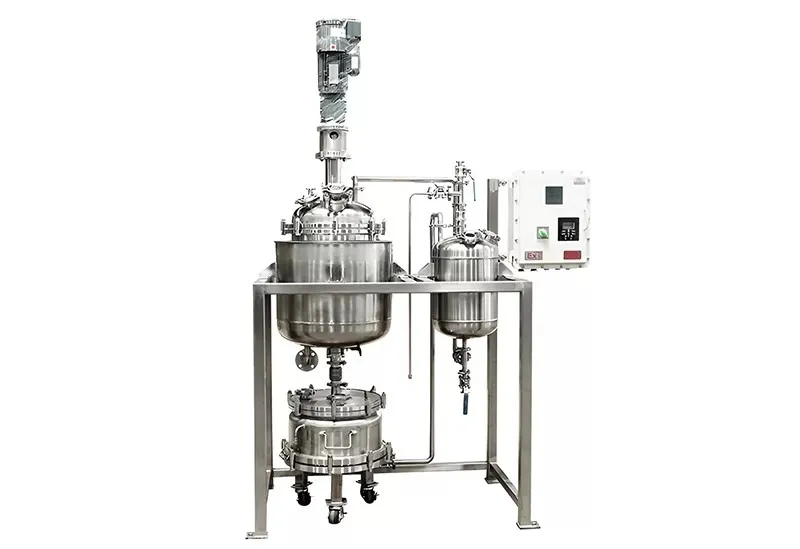
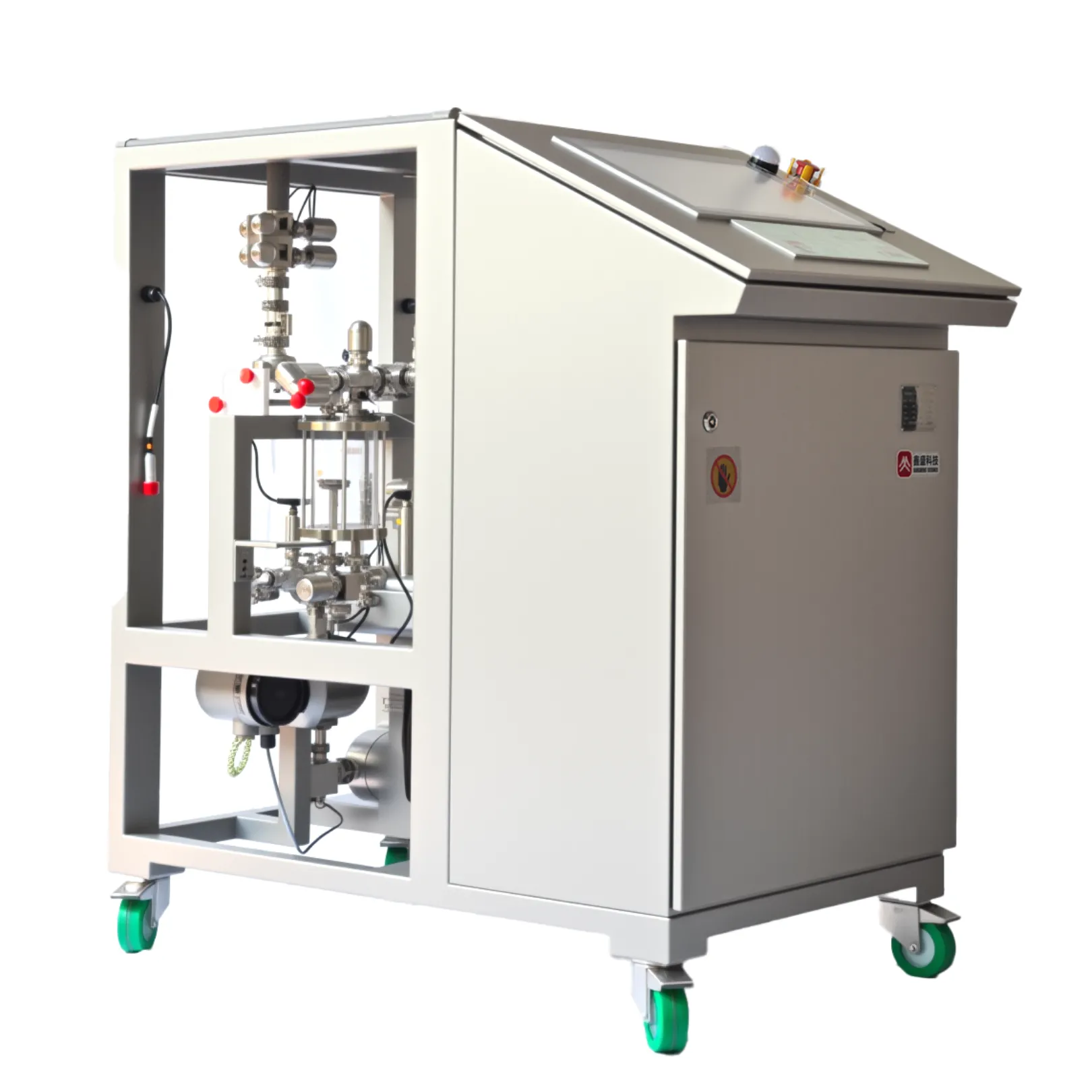
A typical crystallizer brings together a vessel, an agitator, a temperature-control system, process sensors, and connections for adding feed or solvent. Depending on the process, it may also use a condenser, vacuum system, dosing pump, or inline measurement device. The equipment creates and controls the conditions needed for supersaturation while keeping the slurry mixed.
Operators monitor measurable process indicators rather than relying on appearance alone. Useful records include temperature over time, feed rate, agitator speed, batch duration, crystal-size distribution, product moisture, and recovered mass. A simple recovery calculation is: dry crystal mass recovered divided by theoretical crystal mass, multiplied by 100. The theoretical value should account for the feed composition and process stoichiometry.
Cooling crystallization lowers the solution temperature to reduce the solubility of the target material. It is widely used when a substance is more soluble at higher temperatures. Jacketed tanks or vessels with external heat exchangers can provide temperature control. The cooling profile must be developed for the specific material; there is no single cooling rate that suits every product.
Evaporative crystallization removes solvent, often by heating or applying vacuum. As the liquid volume falls, the solution becomes more concentrated and may reach supersaturation. This method is useful when solubility changes only slightly with temperature or when solvent recovery is part of the process.
In antisolvent crystallization, a second liquid is added that reduces the target compound’s solubility but is compatible with the process. Addition rate and mixing matter because local concentration changes can create uneven nucleation. Solvent compatibility, product safety, and solvent recovery should be checked during process development.
Reactive crystallization forms a solid product through a chemical reaction in the liquid phase. It can combine reaction and separation in one operation. The reaction rate, local mixing, and solubility of the product all affect crystal formation, so process testing is important before scale-up.
A batch crystallizer processes a defined charge of material through a sequence of steps. It offers flexibility for multiple products or smaller production campaigns. Continuous crystallizers maintain a flow of feed and product and may suit stable, high-volume processes. Common continuous designs include stirred-tank systems and draft-tube-baffle crystallizers. The best choice depends on production volume, product specifications, changeover needs, and process control requirements.
Good process control can make production more consistent and reduce avoidable material loss. Crystallization equipment helps operators manage heat transfer, mixing, and additions in a defined vessel. These controls matter because crystal properties affect later steps such as filtration, washing, drying, transport, and packaging.
The value of a system should be assessed using product and process data, not broad claims. Compare batches using measures such as product purity, recovery, crystal-size distribution, cycle time, solvent use, and filtration time. For regulated manufacturing, document the process and its controls in line with applicable quality requirements. The FDA’s addresses controls for API production, while its describes a lifecycle approach to process validation.
Do not choose a crystallizer by vessel volume alone. A pilot test can reveal whether heat transfer, mixing, or solids handling changes when the process moves to a larger scale. The provides further technical background on crystallization design and scale-up.
Before production, confirm that the approved recipe, operating limits, and cleaning procedure are available. Verify instrument calibration and inspect the vessel, seals, agitator, valves, and temperature-control connections. During a run, record each critical addition and process change so that results can be compared across batches.
Make one controlled process change at a time when investigating a problem, and record the result. Do not change validated manufacturing conditions without following the site’s change-control and quality procedures.
Crystallization may involve hot liquids, vacuum or pressure, flammable solvents, corrosive chemicals, and moving equipment. Use a documented risk assessment, suitable ventilation and containment, pressure-relief protection where required, and personal protective equipment selected for the actual materials and task. Follow the equipment manufacturer’s operating instructions and the facility’s safety procedures.
For pharmaceutical process development, the International Council for Harmonisation’s explains quality-by-design concepts, including understanding how process variables can affect product quality. Apply the relevant regulations and standards for the product, site, and market; a general article cannot replace a formal engineering or regulatory review.
A crystallizer creates controlled conditions for a dissolved material to form solid crystals. Depending on the process, it can support product recovery, purification, or control of crystal properties.
Both processes form solids from a liquid. Crystallization generally aims to produce an ordered solid with controlled growth, while precipitation often describes rapid solid formation from a solution. In practice, the terms can overlap, and the intended product and process determine the appropriate description.
There is no universal best method. Cooling is suitable when solubility changes meaningfully with temperature; evaporation removes solvent to raise concentration; antisolvent addition changes solvent strength; and reactive crystallization forms a solid through a reaction. Solubility testing and process trials help identify a suitable route.
Useful inputs include batch or hourly production targets, solution and slurry volumes, solubility data, operating temperature and pressure, solvent properties, expected solids loading, required cycle time, and downstream filtration needs. A qualified process or equipment engineer should review the final design.
It can help influence particle size through seeding, supersaturation, temperature, mixing, and addition rate. These variables interact, so the final particle-size distribution should be measured and confirmed in process trials.
Cleaning frequency depends on the material, campaign schedule, cross-contamination risk, and validated cleaning procedure. Follow the manufacturer’s instructions and the facility’s approved cleaning and inspection requirements.
Start by writing down the product specifications, solvent and solubility data, batch size, and downstream separation requirements. Then compare process options and request technical information suited to your application. For equipment selection or process planning, contact XINSHENG to discuss your operating conditions and review the relevant user guide. A well-defined crystallization process equipment plan should connect the crystallizer, controls, safety measures, and downstream steps into one documented workflow.
RELATED INFORMATION

 EN