Nov. 11, 2026XINSHENG

When a laboratory needs to identify or measure compounds in a mixture, a reliable HPLC system can turn a complex sample into useful data. This guide explains the system’s parts, operation, applications, and selection criteria, including what to look for in an HPLC System Manufacturer for pharmaceutical laboratories. Whether you are setting up a quality-control lab or replacing an older instrument, understanding the full process helps you make a sound choice.

HPLC stands for high-performance liquid chromatography. It is an analytical technique that separates the compounds in a liquid sample as the sample travels through a column under pressure. A detector measures the compounds as they leave the column, producing a chromatogram—a graph of detector response against time.
Each compound may interact differently with the column’s stationary phase and the liquid mobile phase. These differences cause compounds to move through the column at different rates. The time a compound takes to reach the detector is its retention time. Analysts can compare retention times and detector responses with suitable reference materials to support identification and measurement. Retention time alone is not definitive proof of identity; the method and supporting evidence matter.
HPLC is also called high-pressure liquid chromatography because pumps drive liquid through the packed column at elevated pressure. In modern analytical practice, “high-performance” is common because it describes the method’s separation capability.
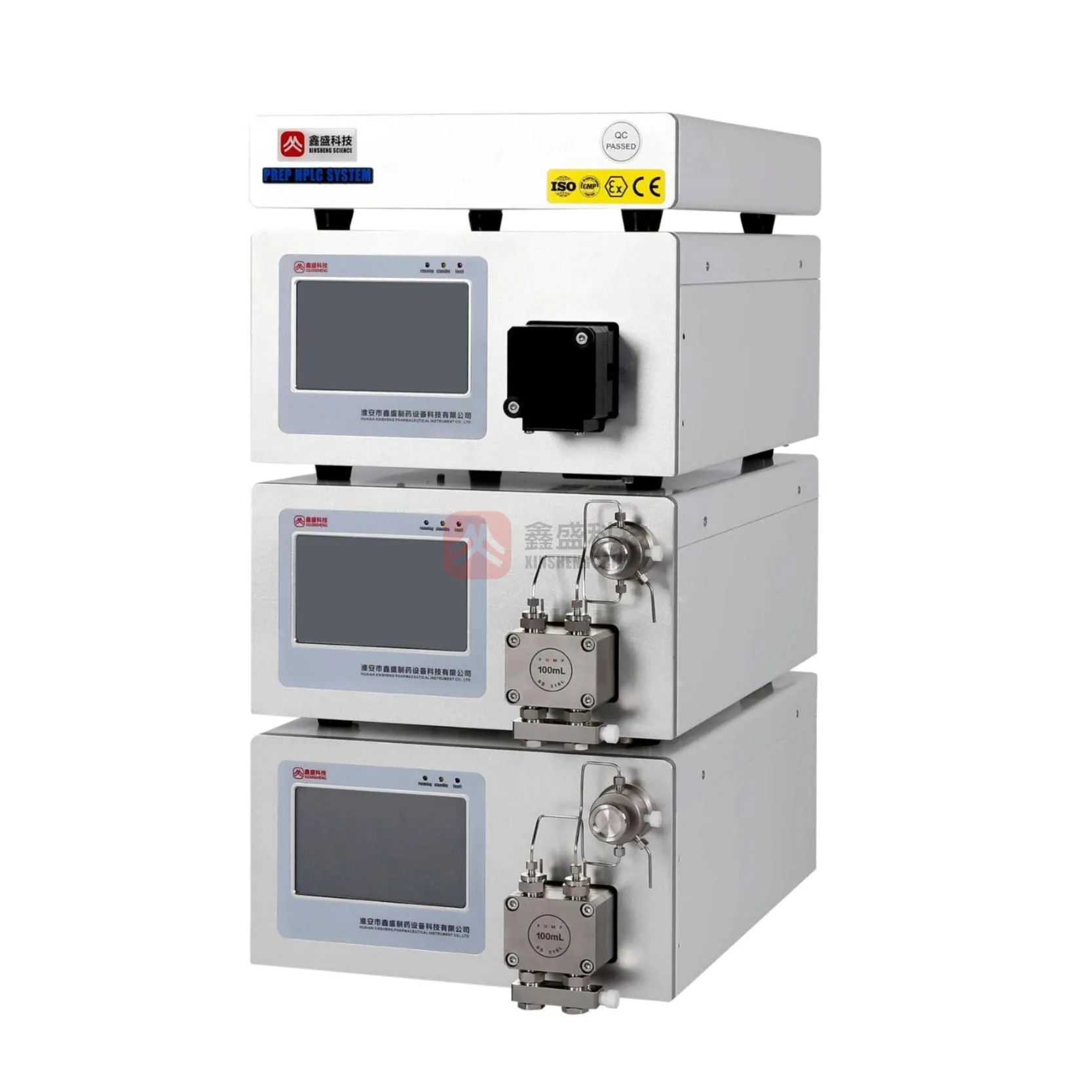
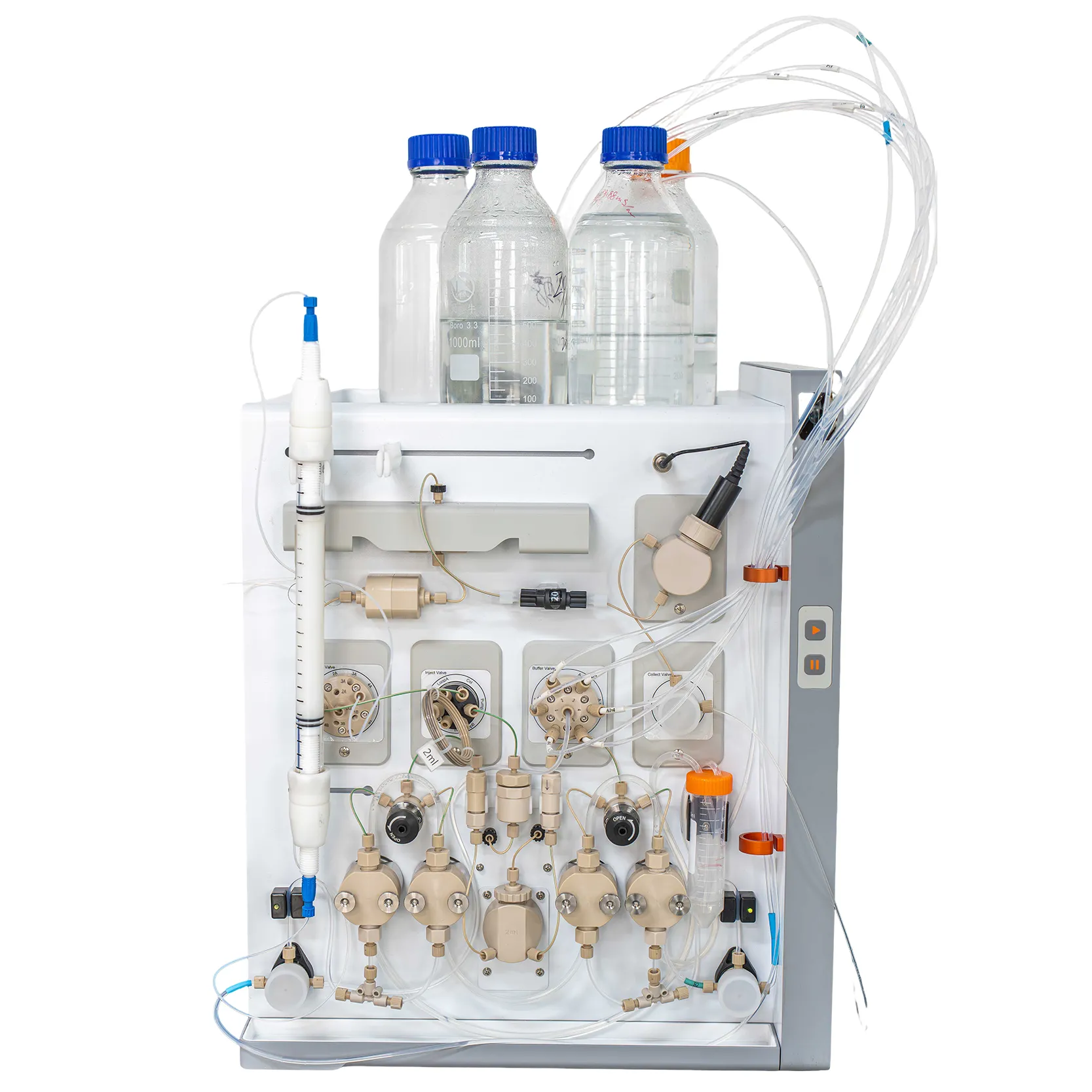
A complete system links sample delivery, separation, detection, and data handling. The exact configuration depends on the method, sample, and laboratory requirements.
Chromatographic methods should be developed and checked for their intended use. For pharmaceutical analytical procedures, the International Council for Harmonisation’s ICH Q2(R2) guideline describes validation characteristics such as accuracy, precision, specificity, detection limit, quantitation limit, linearity, and range where applicable. See the and the FDA’s .
Reversed-phase HPLC (RP-HPLC) is widely used for compounds that can be separated based on their interactions with a nonpolar stationary phase and a more polar mobile phase. Normal-phase chromatography uses a polar stationary phase and a less polar mobile phase. Other approaches include ion-exchange chromatography for charged compounds and size-exclusion chromatography for separation by molecular size.
Isocratic elution keeps the mobile-phase composition constant. Gradient elution changes that composition during the run. UHPLC (ultra-high-performance liquid chromatography) uses systems and columns designed for higher operating pressures and smaller particles than many conventional HPLC methods. A method cannot always be transferred to a different HPLC or UHPLC setup without checking pressure limits, column compatibility, dwell volume, and performance.
Reliable results depend on more than the instrument. Pump performance, injector precision, detector response, column condition, solvent quality, sample preparation, and method control all affect the chromatogram. A problem in one area can lead to unstable baselines, changing retention times, poor peak shape, or inaccurate measurements.
A suitable system can help a laboratory run its methods consistently and support traceable data review. It does not, by itself, guarantee accurate results or regulatory compliance. Staff training, documented procedures, maintenance, method validation or verification, and data controls are also important. For regulated work, select software and equipment based on the laboratory’s applicable rules and documented needs.
When comparing an HPLC System Manufacturer, evaluate the complete support package rather than focusing only on the instrument’s purchase price or advertised specifications.
For laboratories comparing a high-performance liquid chromatography system supplier, a clear response to these questions is more useful than an unsupported claim of “best performance.” Ask for written specifications, suitable application examples, and a defined service plan.
Follow the instrument and column manuals, along with your laboratory’s procedures. Routine care often includes checking solvent levels and lines, using compatible and clean mobile phases, inspecting fittings for leaks, and replacing consumables according to their condition and the manufacturer’s guidance. Do not exceed the pressure limits of the instrument or column.
If the baseline is noisy, check for bubbles, contaminated solvents, detector settings, and loose connections. If pressure rises, inspect for blocked filters, a clogged guard column, precipitated buffer salts, or a blocked column. If retention times shift, review flow rate, mobile-phase composition, temperature, leaks, and column equilibration. Change one factor at a time where practical, document the action, and follow approved procedures. If the cause is unclear, contact qualified service support rather than disassembling components without authorization.
Its main purpose is to separate compounds in a liquid sample so they can be detected and, when the method supports it, identified or measured.
HPLC uses a liquid mobile phase and is suited to many nonvolatile or heat-sensitive compounds. Gas chromatography (GC) uses a gas mobile phase and is commonly used for compounds that can be vaporized without unacceptable breakdown. The right method depends on the sample and analytical goal.
They use the same broad principle of liquid chromatographic separation, but UHPLC systems are designed for higher pressures and often use smaller-particle columns. Instrument pressure limits, columns, and method conditions must be compatible.
Choose based on the compounds and method. UV or PDA detectors suit analytes that absorb ultraviolet or visible light. Fluorescence can offer selective detection for compounds that fluoresce or can be derivatized. Refractive-index detection is used for some compounds with limited UV absorbance, while MS provides mass-related information but requires compatible interfaces and added method expertise.
There is no single interval for every instrument. Follow the manufacturer’s maintenance schedule and your laboratory’s procedures, considering use, solvent exposure, operating conditions, and performance records.
No. Results also depend on method suitability, standards, sample preparation, calibration, system suitability, operator training, maintenance, and data review.
Before purchasing, write down your sample types, target compounds, throughput, detector needs, and data requirements. Then compare documented specifications, service coverage, training, and total ownership costs. Review the instrument user guide and application materials, and arrange a technical discussion or demonstration where possible. If you are evaluating an HPLC System Manufacturer, XINSHENG is one brand you can contact to discuss system options, applications, and support for your laboratory workflow.
References: International Council for Harmonisation, ; U.S. Food and Drug Administration, .
RELATED INFORMATION

 EN